
HMCTS - Accelerated detained appeals
Nationalities and Borders Act - Immigration & Asylym
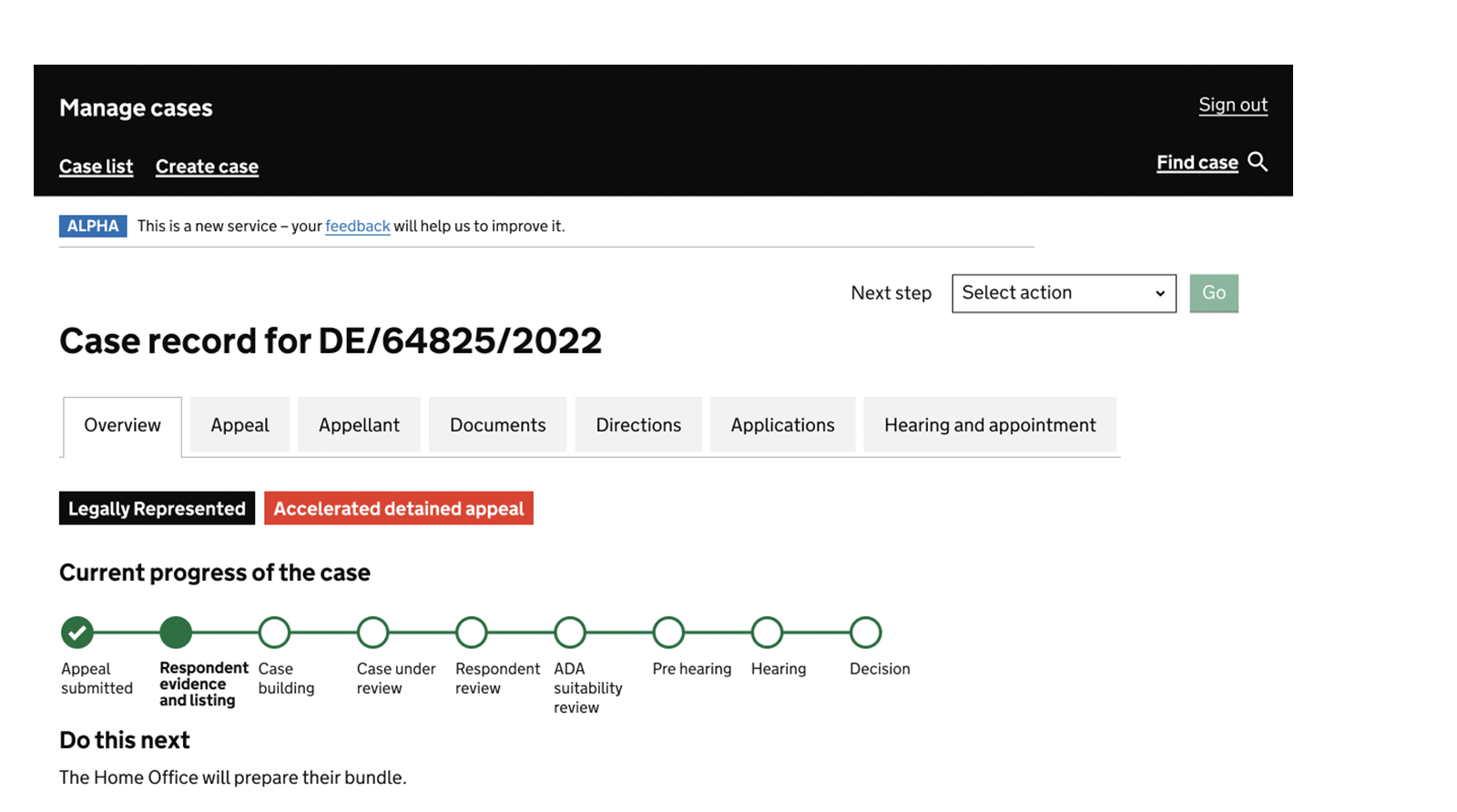
Background
This project focuses on creating a seamless and efficient ADA process, enhancing user experiences for various stakeholders involved in immigration appeals. The implemented functionalities aim to improve overall case management and accessibility to justice.
The Accelerated Detained Appeals (ADA) process is designed to expedite appeals for a specific group of allocated Appellants, guided by formal Tribunal Rules. Appeals are required to be lodged within 5 working days, with the substantive appeal concluded within 25 working days.
The problem
This project focuses on creating a seamless and efficient ADA process, enhancing user experiences for various stakeholders involved in immigration appeals. The implemented functionalities aim to improve overall case management and accessibility to justice.
The Accelerated Detained Appeals (ADA) process is designed to expedite appeals for a specific group of allocated Appellants, guided by formal Tribunal Rules. Appeals are required to be lodged within 5 working days, with the substantive appeal concluded within 25 working days.
The goal
Here are the design requirements they specified:- Tailored designs for various user groups: Admin, Judges, Legal Representatives, Legal Officers, and general improvements to enhance overall usability.
- Introduction of new case flags for improved visibility and categorization.
- Implementation of upfront listing functionality for efficient scheduling.
- ADA suitability assessments integrated into the system for streamlined processing.
- Redesigned case creation process for clarity and efficiency.
- Seamless transfer out of ADA for cases requiring alternative processing.
- Enhanced handling of hearing requirements with early capture for better preparation.
- Introduction of a dynamic progress bar to visually track case advancement.
- Implementation of new filters for improved data sorting and retrieval.
- Streamlined processes for updating detention status and location.
- Movement to manual appeal facilitated with user-friendly features.
- ADA suitability tracking for comprehensive case management.
The approach
The design approach centers on creating tailored experiences for distinct user groups, recognizing the diverse needs of Admin, Judges, Legal Representatives, and Legal Officers. The goal is to optimize interfaces based on user roles, ensuring intuitive navigation and task efficiency.
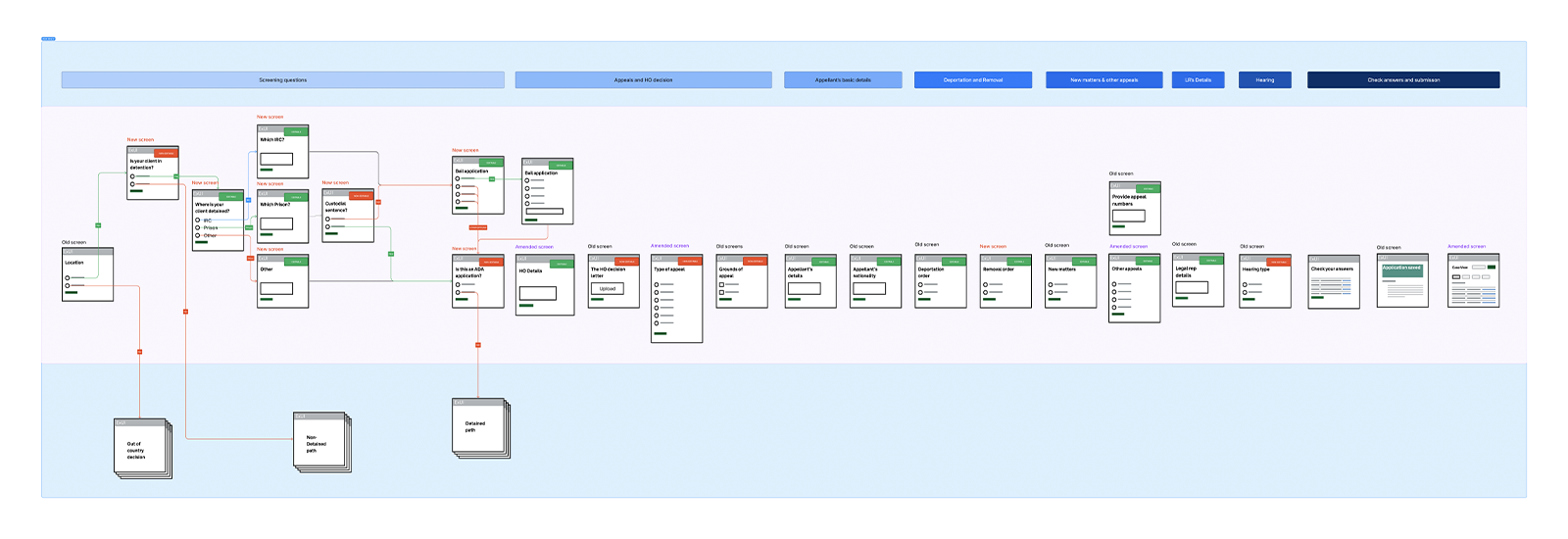
Visual enhancements were introduced to improve visibility and categorization, with color-coded case flags providing a quick and intuitive way to prioritize cases. The scheduling process was streamlined through the implementation of upfront listing functionality, capturing key information early to optimize case timelines.
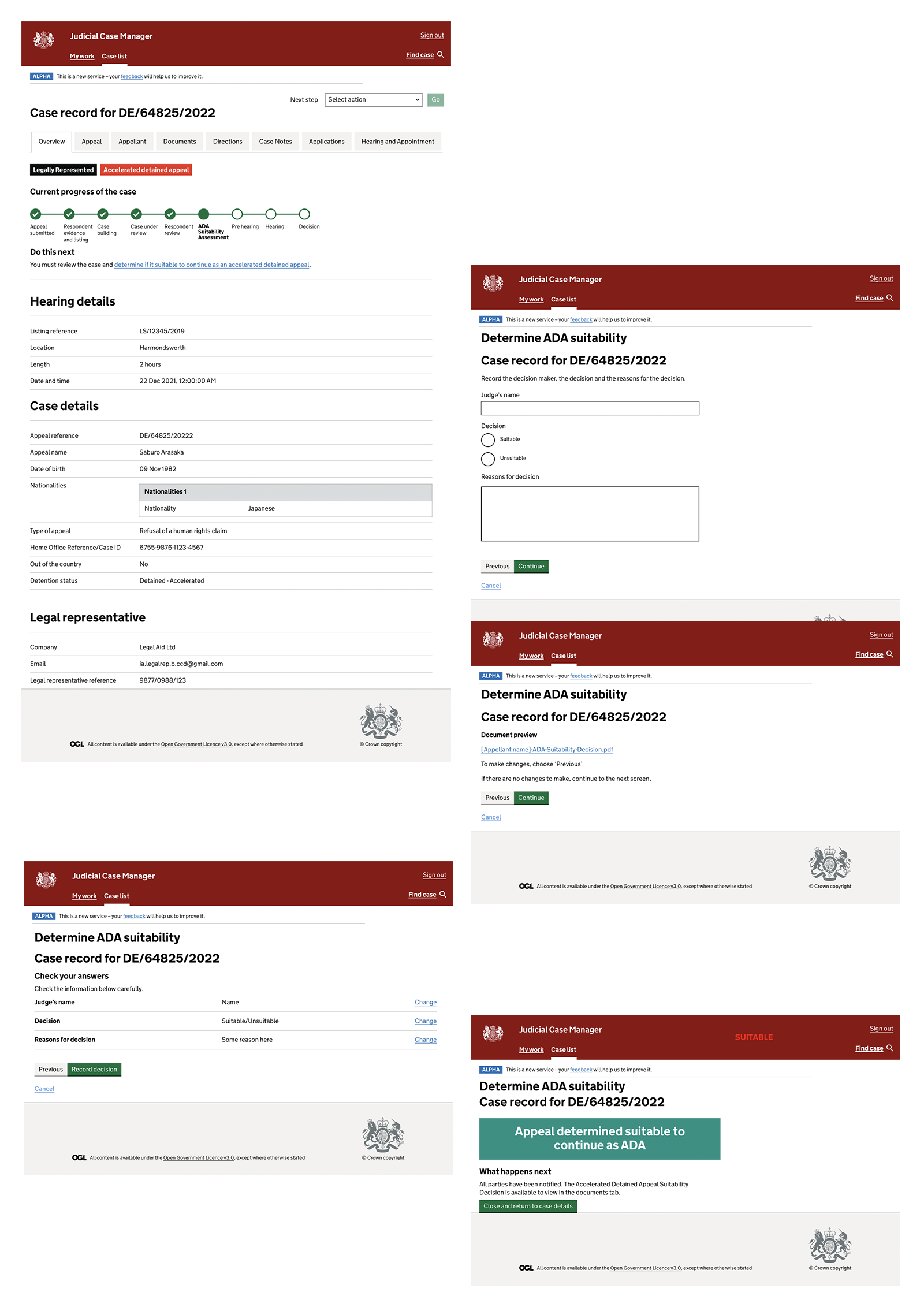
ADA suitability assessments were seamlessly integrated into the system, informed by collaboration with legal experts to ensure a comprehensive evaluation process. The case creation process underwent a redesign for clarity and efficiency, guided by user feedback and usability studies.
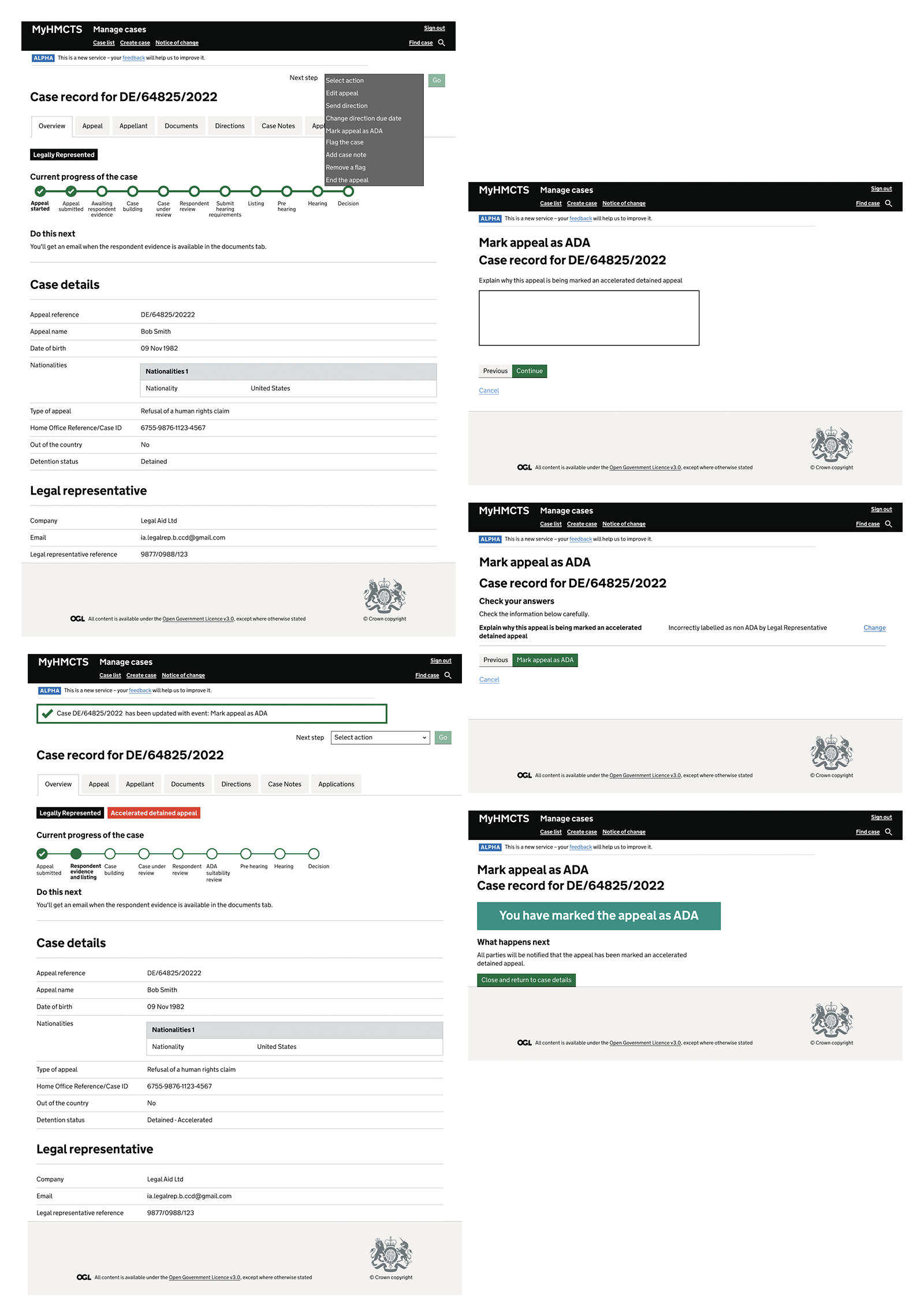
Seamless case transfers out of ADA were facilitated, addressing scenarios requiring alternative processing. Proactive measures were taken to capture hearing requirements early, supporting better-prepared legal teams and judges.

Visual progress tracking was introduced through a dynamic progress bar, offering transparency and a sense of progression. New filters were implemented to enhance data sorting and retrieval, empowering users to quickly access relevant information.
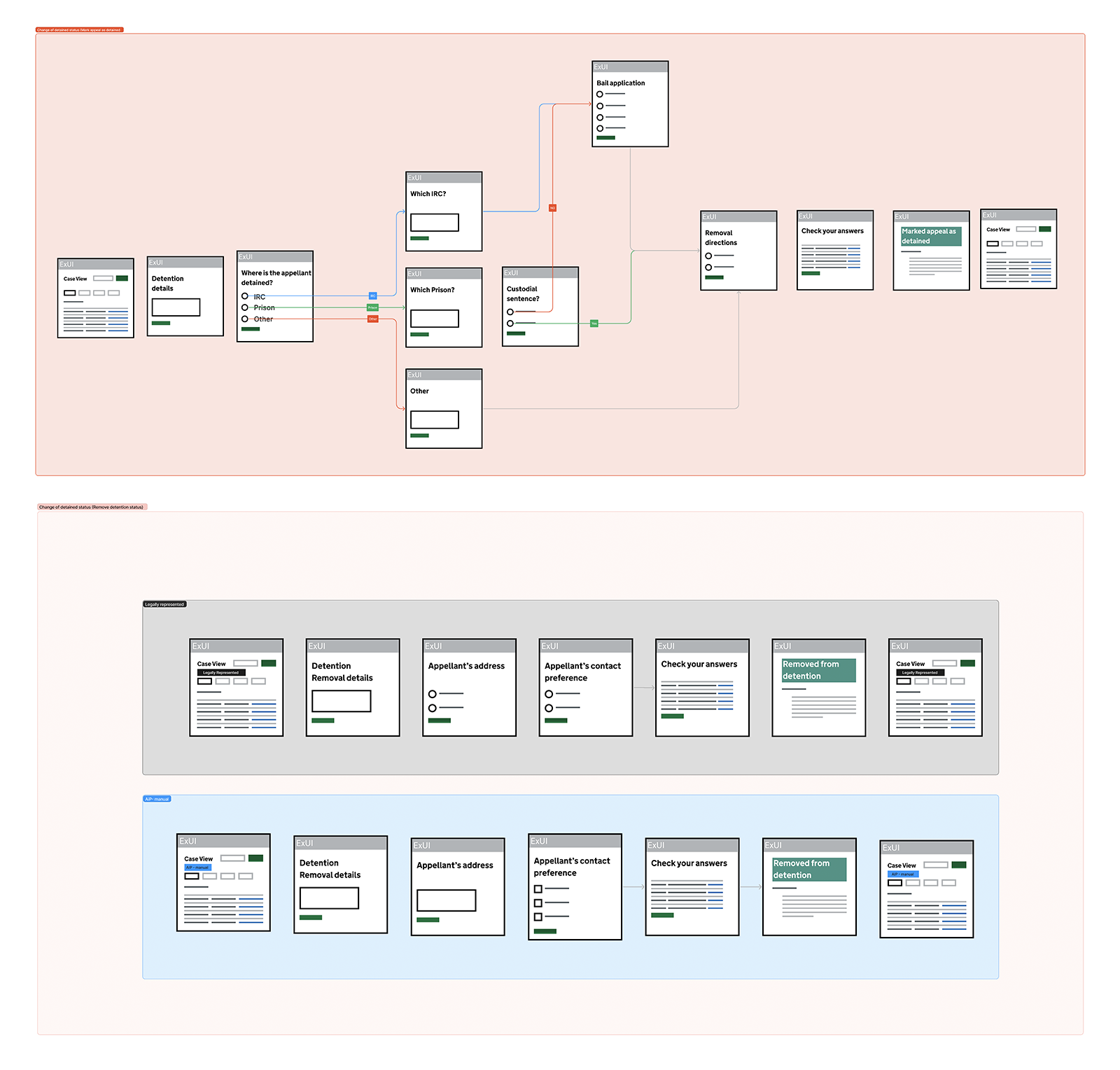
Streamlined processes were designed for updating detention status and location, reducing administrative overhead. User-friendly features facilitated the transition to manual appeal, ensuring a smooth experience for users navigating this stage.
The overall design process involved iterative testing and feedback loops to refine the user experience. Regular collaboration with stakeholders, including legal experts and administrative staff, ensured that the final design not only met user needs but also aligned with organizational goals. The result is an ADA system that prioritizes usability, efficiency, and transparency for all stakeholders involved in immigration appeals.
Further considerations
- Access to Justice: Ensuring the system accommodates unrepresented individuals with a paper route for accessibility in IRCs.
- System Decommissioning: Addressing the imminent decommissioning of ARIA and facilitating a smooth transition to the new Case and CE-File systems.
- Management Information Changes: Implementing updates to Management Information (MI) for measuring changes and assessing process efficiency.